

A small bump inside your mouth may not seem serious at first. However, when it becomes uncomfortable, keeps returning, or interferes with eating and speaking, it can quickly become frustrating. Many people in need of a Dentist Fort Worth search online after noticing a painless, fluid-filled swelling on the lip, tongue, or inside the cheeks. In many cases, this condition is called an oral mucocele.
An oral mucocele is a common cyst-like lesion that develops when a salivary gland becomes blocked or damaged. Although most mucoceles are harmless, they can grow larger, recur frequently, or cause irritation over time. Understanding the causes, prevention methods, and treatment options can help you know when it is time to seek professional dental care.
At Centreport Smiles in Fort Worth, TX 76155, patients often ask how to safely manage oral mucoceles and prevent them from returning. This guide explains everything you need to know in a simple and patient-friendly way.
What Is an Oral Mucocele?
An oral mucocele is a soft, mucus-filled bump that usually appears inside the mouth. It commonly develops on:
- The lower lip
- Inside the cheeks
- Under the tongue
- Roof of the mouth
- Gums
These bumps form when saliva becomes trapped after a salivary gland duct is injured or blocked. The swelling may appear clear, bluish, or pink and can vary in size.
Most mucoceles are painless, but larger ones may interfere with talking, chewing, or swallowing.
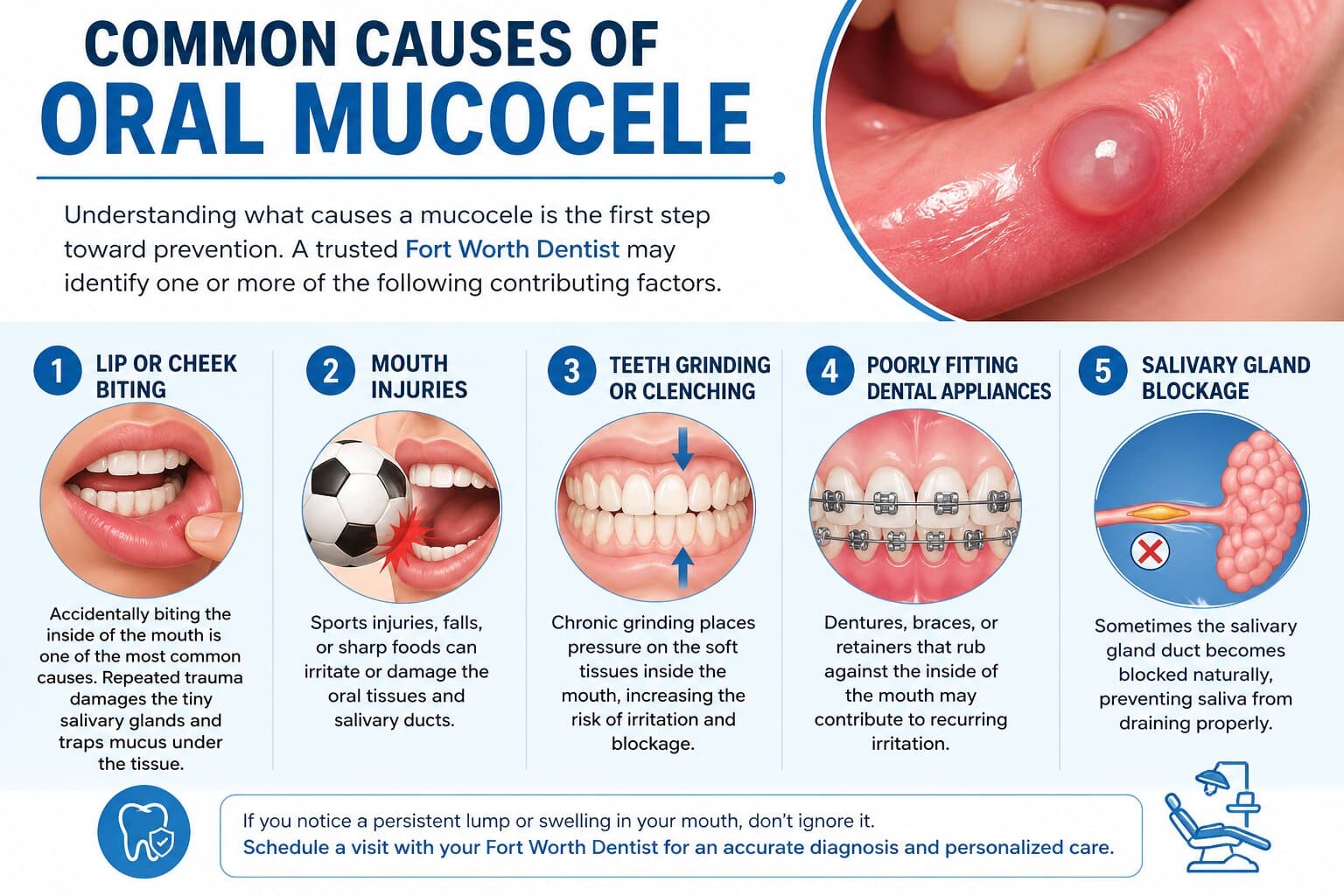
Common Causes of Oral Mucocele
Understanding what causes a mucocele is the first step toward prevention. A trusted Fort Worth Dentist may identify one or more of the following contributing factors.
Lip or Cheek Biting
Accidentally biting the inside of the mouth is one of the most common causes. Repeated trauma damages the tiny salivary glands and traps mucus under the tissue.
Mouth Injuries
Sports injuries, falls, or sharp foods can irritate or damage the oral tissues and salivary ducts.
Teeth Grinding or Clenching
Chronic grinding places pressure on the soft tissues inside the mouth, increasing the risk of irritation and blockage.
Poorly Fitting Dental Appliances
Dentures, braces, or retainers that rub against the inside of the mouth may contribute to recurring irritation.
Salivary Gland Blockage
Sometimes the salivary gland duct becomes blocked naturally, preventing saliva from draining properly.
Centreport Smiles
Symptoms of an Oral Mucocele
Mucoceles often have recognizable symptoms, including:
- A soft, round bump inside the mouth
- Clear or bluish appearance
- Swelling that changes in size
- Mild discomfort while eating
- A lesion that repeatedly bursts and returns
Although most are harmless, persistent growths should always be examined by a dental professional to rule out other oral health concerns.
How to Prevent Oral Mucoceles
Prevention focuses on reducing irritation and protecting the soft tissues inside the mouth. A knowledgeable Dentist Fort Worth may recommend the following habits.
Avoid Biting the Lips or Cheeks
Stress or nervous habits can lead to accidental biting. Becoming aware of these habits can help reduce repeated trauma.
Wear Protective Mouthguards
If you play sports or grind your teeth at night, a custom mouthguard can help protect oral tissues.
Maintain Good Oral Hygiene
Healthy gums and tissues are less likely to become irritated or inflamed. Daily brushing, flossing, and regular dental cleanings are important.
Address Dental Appliance Issues
If braces, retainers, or dentures feel uncomfortable, adjustments may help prevent irritation.
Stay Hydrated
Drinking enough water supports healthy saliva production and oral tissue function.
When Should You See a Fort Worth Dentist?
Some oral mucoceles heal on their own within a few weeks. However, it is important to seek professional care if you notice:
- A bump lasting longer than two weeks
- Increasing pain or swelling
- Difficulty speaking or eating
- Frequent recurrence
- Bleeding or infection
A professional evaluation ensures the lesion is properly diagnosed and treated if necessary.
Treatment Options for Oral Mucocele
Treatment depends on the size, location, and frequency of the mucocele. A skilled Fort Worth Dentist will recommend the most appropriate solution based on your symptoms.
Monitoring Small Mucoceles
Minor mucoceles may heal naturally without invasive treatment. Patients are often advised to avoid touching or biting the area.
Professional Drainage
In some cases, a dentist may safely drain the lesion to relieve discomfort. However, this may not prevent recurrence if the damaged gland remains.
Surgical Removal
For persistent or recurring mucoceles, minor oral surgery may be recommended. This procedure removes both the cyst and the affected salivary gland to reduce the chance of recurrence.
The procedure is usually quick and performed with local anesthesia.
Laser Treatment
Some dental offices use laser technology for precise and minimally invasive removal. Laser treatment may reduce bleeding and healing time.
Source: Medfin
Recovery After Mucocele Treatment
Recovery is generally smooth when post-treatment instructions are followed carefully.
Patients are often advised to:
- Eat soft foods temporarily
- Avoid spicy or acidic foods
- Keep the area clean
- Avoid touching the surgical site
- Attend follow-up visits if needed
Most people recover within a short period and return to normal activities quickly.
Why Early Evaluation Matters
Although oral mucoceles are usually non-cancerous, not every oral lump is harmless. Early diagnosis helps identify whether the growth is truly a mucocele or another oral condition requiring treatment.
Routine dental exams also help detect issues before they become more uncomfortable or complex.
At Centreport Smiles in Fort Worth, TX 76155, patient comfort and preventive care remain a priority. Early attention to oral changes can support long-term oral health and peace of mind.
Common Questions Patients Ask About Oral Mucoceles
Can an oral mucocele go away on its own?
Yes, small mucoceles sometimes heal naturally within a few weeks. However, recurring or persistent bumps should be professionally evaluated.
Is a mucocele painful?
Most mucoceles are painless, although larger ones may become uncomfortable during eating or speaking.
Can I pop a mucocele at home?
It is not recommended. Attempting to pop or cut a mucocele can lead to infection, irritation, or recurrence.
Are oral mucoceles contagious?
No, mucoceles are not infections and cannot spread from person to person.
How long does treatment take?
Simple removal procedures are usually completed in one visit, and recovery is often relatively quick.
Conclusion
An oral mucocele may seem minor initially, but ongoing irritation or recurring swelling should never be ignored. Knowing the causes, prevention methods, and available treatment options can help you protect your oral health and avoid future discomfort.
If you notice persistent bumps, swelling, or irritation inside your mouth, professional evaluation is the safest next step. Centreport Smiles proudly serves patients in Fort Worth, TX 76155 with compassionate and personalized dental care.
Schedule your appointment today to discuss your symptoms and receive guidance from a trusted Dentist Fort Worth team dedicated to helping you maintain a healthier smile.
