
Tooth pain doesn’t wait for a convenient time. It can strike during a Friday night football game at Farrington Field, in the middle of your shift in Downtown Fort Worth, or just as you’re sitting down to dinner in Sundance Square. One moment you’re fine. The next, you’re holding your jaw and searching for fast relief.
Dental pain is more than uncomfortable—it’s distracting, stressful, and sometimes overwhelming. The good news? You don’t have to live with it. Modern emergency dental care and advanced root canal treatment can stop pain quickly and protect your smile for the long run.
If you’ve ever searched for an Emergency Dentist Fort Worth residents trust, you’re likely looking for two things: immediate relief and lasting results. Let’s walk through how today’s dental care delivers both.
When Tooth Pain Becomes an Emergency
Not every toothache needs urgent treatment—but many do. Knowing the difference can save you time, stress, and even your tooth.
Common Dental Emergencies
-
Severe, throbbing tooth pain
-
Swelling in the gums or jaw
-
A cracked or broken tooth
-
A knocked-out tooth
-
Sudden sensitivity to hot or cold that won’t go away
-
Signs of infection (bad taste, fever, facial swelling)
In Fort Worth’s busy lifestyle—whether you’re commuting on I-35W or spending weekends at the Fort Worth Stockyards—dental emergencies can happen unexpectedly.
The most important thing to remember: pain is your body’s warning sign. Ignoring it can allow infection to spread and cause more serious health issues.
How Emergency Dental Care Stops Pain Fast
When you come in with severe discomfort, the first goal is simple: get you out of pain.
Here’s what typically happens during an emergency visit:
1. Quick but Thorough Evaluation
Digital X-rays and a gentle exam help identify the exact cause of your pain.
2. Immediate Pain Relief
This may include:
-
Local anesthesia
-
Draining infection
-
Temporary restoration
-
Prescribed medication if necessary
3. Clear Treatment Plan
You’ll leave knowing:
-
What caused the issue
-
What treatment is needed
-
How to prevent it from happening again
Modern techniques mean treatment is far more comfortable than most people expect. Many patients are surprised by how fast their pain improves—often the same day.
Why Root Canals Have Changed for the Better
Let’s address the elephant in the room.
The phrase “root canal” still makes some people nervous. But today’s procedure is nothing like the outdated stories you may have heard.
A root canal is designed to relieve pain, not cause it.
What Actually Happens During a Root Canal?
When the inner pulp of your tooth becomes infected, it creates pressure and inflammation. That’s the source of your pain.
During the procedure:
-
The infected tissue is gently removed
-
The inside of the tooth is cleaned and disinfected
-
The space is sealed to prevent reinfection
-
A crown is often placed to protect the tooth
Most patients say it feels similar to getting a filling. With modern anesthetics and technology, discomfort during the procedure is minimal.
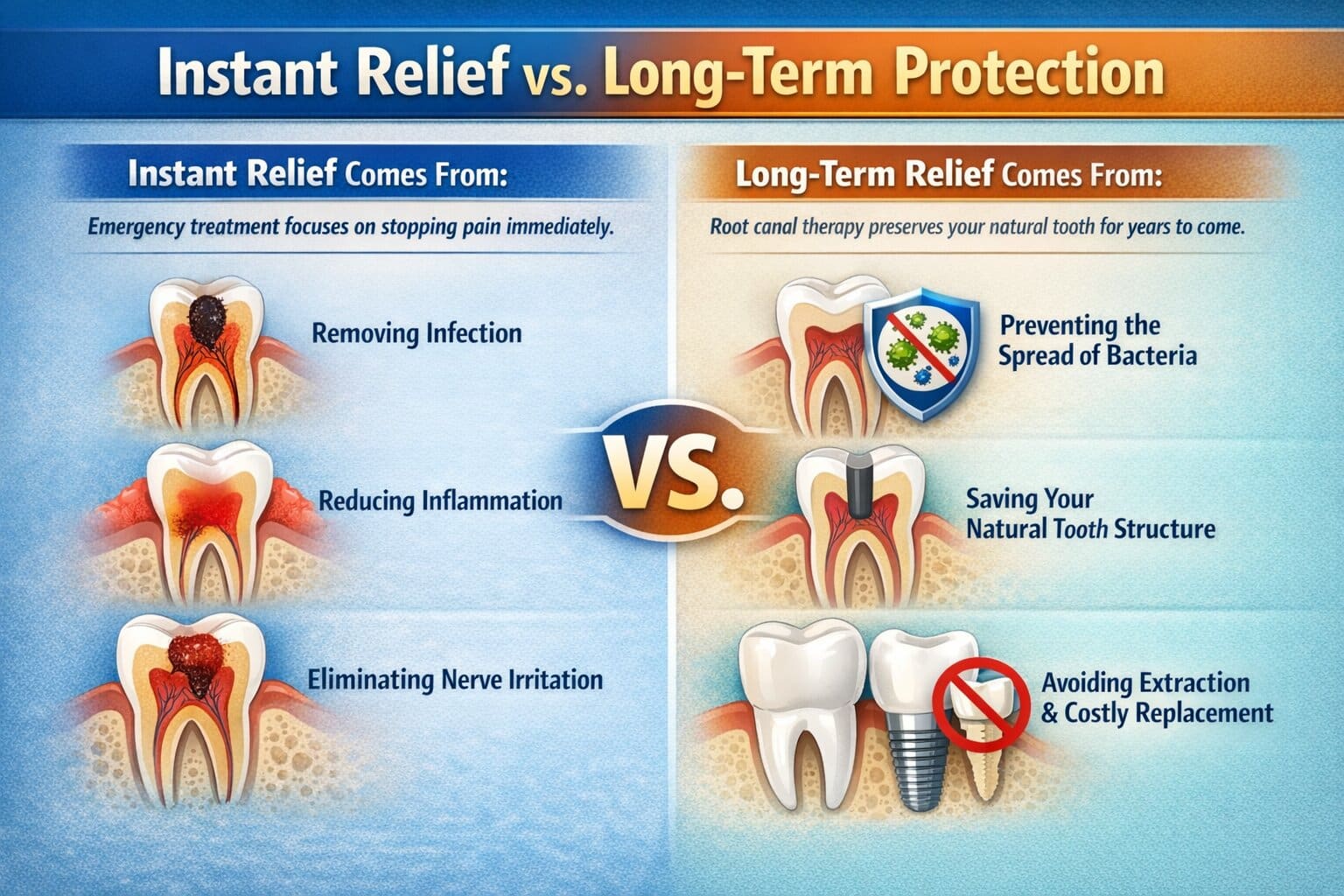
Instant Relief vs. Long-Term Protection
Emergency treatment focuses on stopping pain immediately.
Root canal therapy focuses on preserving your natural tooth for years to come.
Instant Relief Comes From:
-
Removing infection
-
Reducing inflammation
-
Eliminating nerve irritation
Long-Term Relief Comes From:
-
Preventing the spread of bacteria
-
Saving your natural tooth structure
-
Avoiding extraction and costly replacement
When handled promptly by an experienced Emergency Dentist Fort Worth patients rely on, root canal therapy can restore full function and comfort—often in just one or two visits.
Why Acting Quickly Matters in Fort Worth
Fort Worth’s weather can swing from hot summers to chilly winter mornings. Temperature changes often make tooth pain feel worse. If you already have sensitivity, infection can escalate quickly.
Local lifestyle factors also play a role:
-
Sports injuries from youth leagues and high school athletics
-
Busy work schedules delaying routine checkups
-
Stress-related teeth grinding
Delaying care may lead to:
-
Abscess formation
-
Bone loss
-
Tooth extraction
-
Higher treatment costs
Seeking care early makes treatment simpler and recovery faster.
Signs You Might Need a Root Canal
Not sure if your pain requires more than a filling? Watch for these signs:
-
Persistent, deep aching pain
-
Pain when chewing or touching the tooth
-
Prolonged sensitivity to heat or cold
-
Swollen or tender gums
-
Darkening of the tooth
-
A small pimple-like bump on the gums
If you notice these symptoms, it’s best to schedule an evaluation right away.
What Makes Modern Root Canal Treatment Comfortable?
Today’s dental technology makes all the difference.
Comfort-Focused Techniques Include:
-
Advanced digital imaging for precision
-
Rotary instruments for smoother cleaning
-
Strong, long-lasting local anesthesia
-
Gentle techniques designed for patient comfort
Many patients are surprised at how relaxed they feel during treatment. Some even say the anticipation was worse than the procedure itself.
What to Expect After Treatment
Recovery is usually straightforward.
You may experience:
-
Mild tenderness for a few days
-
Slight sensitivity when chewing
This typically improves quickly and can be managed with over-the-counter medication.
Most importantly:
The intense pain you felt before treatment is gone.
With proper care, a treated tooth can last decades.
Common Questions Ask
How quickly can I be seen for a dental emergency?
Many practices offer same-day appointments for urgent cases, especially if you call early in the day.
Is a root canal better than pulling the tooth?
In most cases, yes. Saving your natural tooth helps maintain jaw strength, bite alignment, and overall oral health.
Will I need a crown afterward?
Often, yes—especially for back teeth. A crown protects the treated tooth from cracking.
Can infection spread if untreated?
Yes. Dental infections can move into surrounding tissue and even affect overall health.
Is emergency dental care expensive?
Costs vary depending on the issue, but early treatment is usually more affordable than waiting.
Tips to Prevent Future Dental Emergencies
While not all emergencies are avoidable, you can lower your risk:
-
Brush twice daily with fluoride toothpaste
-
Floss every day
-
Wear a mouthguard during sports
-
Avoid chewing ice or hard candies
-
Schedule regular dental checkups
-
Don’t ignore early signs of sensitivity
Preventive care is always easier—and less costly—than emergency treatment.