
Tooth pain has a way of showing up at the worst possible time. One minute you’re enjoying lunch, the next you feel a sharp sting while chewing. Sometimes the discomfort builds slowly. Other times, it comes out of nowhere and refuses to go away.
Sudden tooth pain is your body’s warning signal. It usually means something deeper is happening—an infection, nerve irritation, or damage that needs quick attention. Ignoring it may turn a small issue into a bigger, more painful, and more expensive problem.
For residents in the Fort Worth area, quick access to an Emergency Dentist Fort Worth can make the difference between saving a tooth and losing it. Let’s understand why tooth pain appears suddenly and what immediate dental care can do to help.
Why Tooth Pain Can Start Without Warning
Tooth pain rarely happens without a reason. In many cases, the problem has been developing silently for weeks or months.
1. Deep Tooth Decay
Cavities don’t always hurt in the early stages. But once decay reaches the inner layer of the tooth (the pulp), it irritates the nerve and causes sudden, intense pain—especially with hot, cold, or sweet foods.
2. Infection or Abscess
A dental abscess is a pocket of infection around the tooth root or gums. Symptoms may include:
-
Severe throbbing pain
-
Swelling in the face or jaw
-
Sensitivity to pressure
-
Fever or bad taste in the mouth
This condition requires urgent treatment to prevent the infection from spreading.
3. Cracked or Broken Tooth
Biting on something hard—ice, nuts, or hard candy—can crack a tooth. Even a small fracture can expose the nerve and cause sharp pain when chewing.
4. Gum Problems
Inflamed or infected gums can pull away from the tooth, exposing sensitive areas. This often causes sudden sensitivity or discomfort.
5. Teeth Grinding or Clenching
Many people grind their teeth at night without realizing it. Over time, this pressure weakens teeth and can lead to sudden pain or fractures.
When Tooth Pain Becomes an Emergency
Not every toothache requires immediate care, but some symptoms should never be ignored.
Seek urgent dental care if you notice:
-
Severe or worsening pain
-
Swelling in the face or jaw
-
Bleeding that doesn’t stop
-
A knocked-out or loose tooth
-
Signs of infection (fever, swelling, pus)
-
Pain after a recent dental procedure
If you’re in areas like Arlington, Euless, Bedford, or near DFW Airport, finding an Emergency Dentist Fort Worth quickly can prevent complications and relieve pain faster.
Source: Smiles Dental Group
How Emergency Dentistry Helps
Emergency dental care focuses on two goals: stopping the pain and fixing the underlying problem.
Immediate Pain Relief
The dentist will first examine the affected area and take digital X-rays if needed. Treatment may include:
-
Removing infection
-
Draining an abscess
-
Applying medication
-
Stabilizing a damaged tooth
Relief often begins the same day.
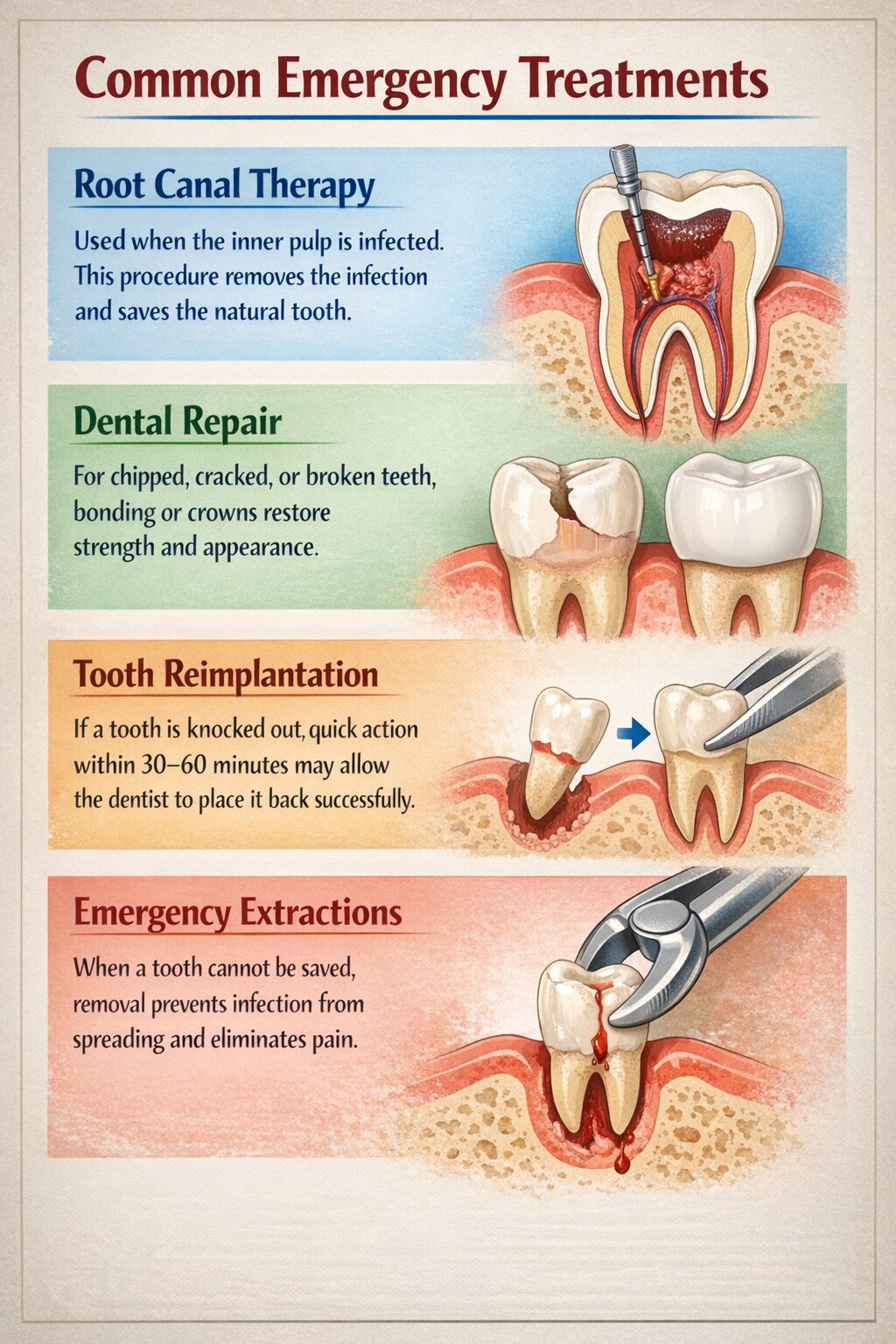
Common Emergency Treatments
Root Canal Therapy
Used when the inner pulp is infected. This procedure removes the infection and saves the natural tooth.
Dental Repair
For chipped, cracked, or broken teeth, bonding or crowns restore strength and appearance.
Tooth Reimplantation
If a tooth is knocked out, quick action within 30–60 minutes may allow the dentist to place it back successfully.
Emergency Extractions
When a tooth cannot be saved, removal prevents infection from spreading and eliminates pain.
What to Do Before You Reach the Dentist
If sudden tooth pain strikes, these steps can help manage the situation:
-
Rinse your mouth with warm salt water
-
Apply a cold compress to reduce swelling
-
Take over-the-counter pain relief (as directed)
-
Avoid chewing on the affected side
-
If a tooth is knocked out, keep it in milk or saliva and visit the dentist immediately
Avoid placing aspirin directly on the gums—it can irritate the tissue.
Local Tips for Fort Worth Residents
Life in Fort Worth is busy—between work, school schedules, and commuting around I-820 or Highway 183, dental pain can feel like a major disruption.
Here’s how to stay prepared:
-
Keep your dentist’s contact information saved on your phone
-
Schedule routine checkups every six months to catch problems early
-
Wear a mouthguard if you play sports or grind your teeth
-
Don’t delay care—small issues become emergencies quickly
Whether you live near Centreport, West Fort Worth, or surrounding neighborhoods, having a trusted dental office nearby ensures you’re never stuck managing pain alone.
Signs You Should Never Ignore
Call a dentist immediately if you experience:
-
Swelling that affects breathing or swallowing
-
Sudden sensitivity that turns into constant pain
-
Gum swelling with pus
-
A darkened or discolored tooth after injury
-
Persistent pain lasting more than 24–48 hours
These symptoms often indicate infection or nerve damage that needs prompt treatment.
How Emergency Care Protects Your Overall Health
Dental infections don’t stay limited to the mouth. If untreated, bacteria can spread to the jaw, sinuses, or bloodstream.
Prompt care helps:
-
Prevent serious infections
-
Preserve natural teeth
-
Reduce treatment costs
-
Restore normal eating and sleeping
-
Protect overall health
That’s why quick access to an Emergency Dentist Fort Worth is essential for both comfort and safety.
Quick Answers About Sudden Tooth Pain
- What causes sudden sharp pain when biting?
This often indicates a cracked tooth, loose filling, or infection affecting the tooth nerve.
- Can a toothache go away on its own?
Pain may temporarily decrease, but the underlying problem usually remains and may worsen later.
- How fast should I see a dentist?
If pain is severe, lasts more than a day, or includes swelling, seek care as soon as possible.
- Is swelling always serious?
Yes. Facial or gum swelling often signals infection and requires urgent treatment.
- Can emergency dental visits save a knocked-out tooth?
Yes—if treated quickly, ideally within an hour.
Conclusion: Don’t Wait for the Pain to Get Worse
Sudden tooth pain is never random. It’s a sign that your tooth or gums need attention right away. Acting quickly can save your tooth, reduce discomfort, and prevent serious complications.
If you or a family member experiences unexpected dental pain, Centreport Smiles is here to provide fast, compassionate care when you need it most. Don’t wait for the problem to worsen—Book your appointment today and get back to smiling comfortably.
Related Articles

By Centreport Smiles